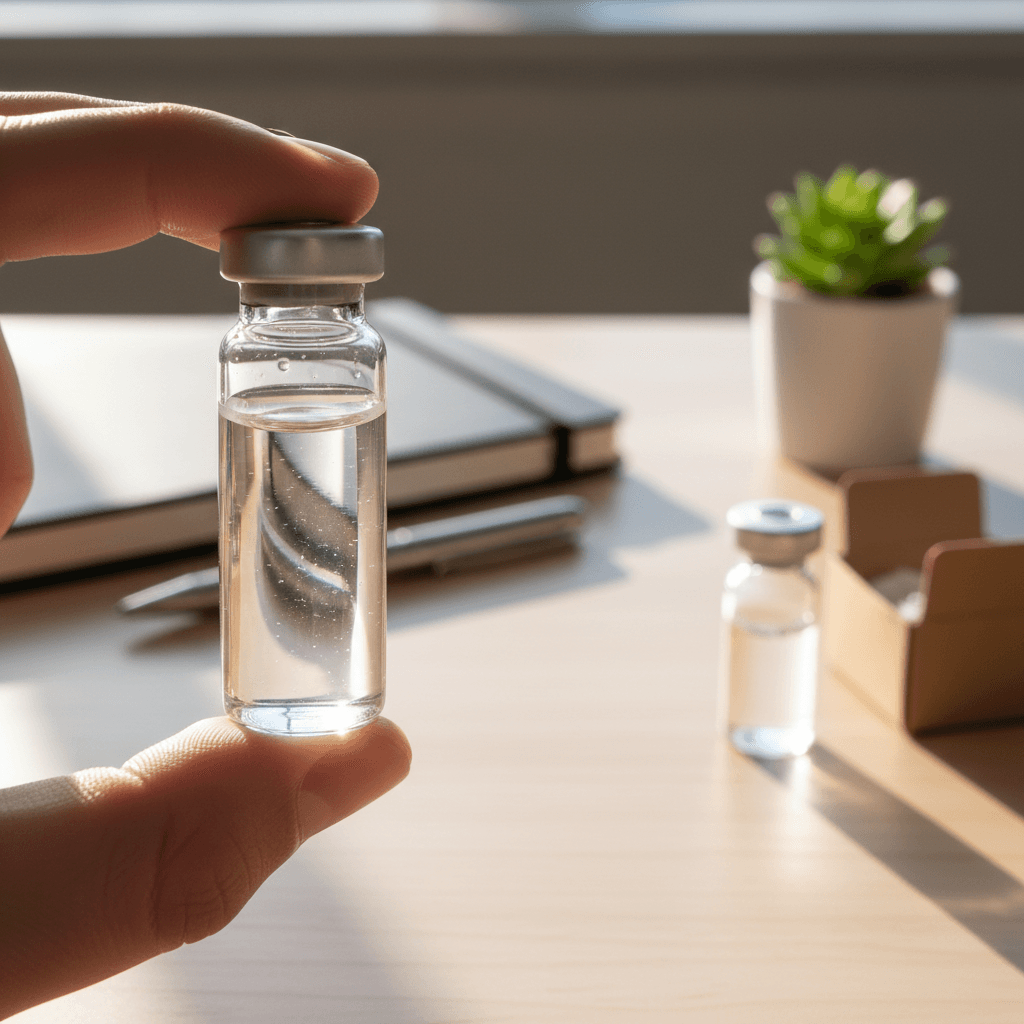
Why Peptide Quality Matters for Research
When working with bioactive peptides such as BPC-157 for tissue repair studies, TB-500 for wound healing research, or GHK-Cu for dermatological applications, the difference between usable data and wasted resources often comes down to one factor: knowing exactly what the material is.
Peptide quality is not about chasing the highest purity number possible. It is about reproducibility. An experiment run with a peptide assumed to be 98% pure but actually 87% pure produces incorrect dose calculations and compromised results, at a cost of time and money. Understanding how to read testing documentation and verify the actual contents of a vial keeps research valid.
Most "research grade" peptides from reputable suppliers fall in the 95-99% purity range. This is sufficient for in vitro work, animal studies, and most in vivo applications. The key is understanding what those numbers mean and how to confirm them.
Understanding the Certificate of Analysis (COA)
A Certificate of Analysis is the primary document for verifying peptide quality. It functions as the peptide's identity record, describing exactly what has been supplied.
What a Complete COA Includes
Essential Elements:
- Peptide name and sequence (sometimes partially formatted for proprietary reasons)
- Batch/lot number (trackable to specific manufacturing run)
- Purity percentage (typically from HPLC analysis)
- Net weight in milligrams
- Appearance (visual description: white powder, off-white lyophilized cake)
- Storage requirements
- Manufacturing and testing dates
- Supplier/manufacturer information
Typical Format:
Peptide: BPC-157 Acetate
Batch: BP2024-1187
Purity (HPLC): 98.5%
Appearance: White lyophilized powder
Net Weight: 10mg (±0.5mg)
MF: C62H110O16N18
MW: 1419.6 Da
Manufactured: March 2026
Tested: March 2026
Red Flags in Documentation
Certain signs warrant caution when evaluating a supplier:
- No batch number: Every legitimate product has traceable lot information
- Only "high purity" claims without specific percentages
- Missing testing dates or unreasonable gaps between manufacture and testing
- No appearance or weight specifications
- No supplier contact information
- Generic certificates that could apply to any peptide
A legitimate COA reads like a specific technical document. Vague, templated documents that do not identify the actual product warrant questioning.
HPLC Testing Standards Explained
High-Performance Liquid Chromatography is the standard analytical method for measuring peptide purity, and HPLC methods are used to assess both peptide content and impurities in synthetic peptide reference standards (McCarthy 2023, Pharm Res, PMID 36949371). The following explains what the numbers indicate.
How HPLC Purity Works
The testing process injects the peptide sample into a chromatograph. The instrument separates chemical components as they pass through a specialized column, detecting each substance based on how it absorbs light. The result is a chromatogram, a visual graph showing peaks that represent different compounds.
The main peak is the target peptide sequence. Smaller peaks represent impurities. The purity percentage is calculated as:
(Main Peak Area / Total Area) × 100 = Purity %
A "98.5% purity" reading means 98.5% of the detected material is the correct peptide, and the remaining 1.5% are other detected substances.
What Impurities Actually Are
The impurities below 98% are not mysterious contaminants. They typically include:
- Peptide fragments: incomplete sequences from manufacturing
- Deletion sequences: missing amino acids from synthesis errors
- Oxidation products: peptide molecules that reacted with oxygen during processing or storage
- Diastereomers: structurally similar variants
- Residual solvents: manufacturing chemicals that were not fully removed
- Salt forms: acetate or TFA counterions in varying amounts
For most research applications, peptides at 95%+ purity are suitable. The 2-5% impurity profile usually consists of closely related peptide materials, not dangerous contaminants. Nonetheless, understanding the composition matters for dose calculations.
Practical Quality Verification Protocol
The following procedure applies on receipt of a peptide order.
Step 1: Visual Inspection Upon Arrival
Check packaging integrity immediately. Lyophilized peptides should arrive in sealed vials or ampoules, typically packaged with desiccant. Physical signs of problems include:
- Visible moisture or clumping
- Discoloration (most research peptides are white to off-white)
- Damaged seals or compromised packaging
Step 2: Documentation Review
Compare the included COA against the order placed. Verify:
- Correct peptide name and sequence
- Batch number matches on all documentation
- Purity percentage meets research requirements
- Testing date is recent (within 3-6 months)
- Weight matches the order
Step 3: Storage Setup
Proper storage prevents degradation that would invalidate quality checks. General guidelines:
- Short-term (weeks): Refrigerate at 2-8°C
- Long-term (months+): Freeze at -20°C or below
- Extended storage: -80°C for maximum stability
- Always protect from light by storing in dark containers or wrapping in foil
- Allow the vial to reach room temperature before opening to prevent condensation introducing moisture
Step 4: Independent Verification (For Serious Research)
For publication-grade work or any study where results are critical, consider independent lab testing. For approximately $150-300, analytical laboratories offer:
- Mass spectrometry: confirms exact molecular weight and sequence
- HPLC purity re-testing: verifies supplier claims
- Purity assessment: identifies specific impurities present
This step is particularly worthwhile for expensive peptides or work where reproducibility matters. A small investment in verification prevents much larger losses from compromised research.
Quality Standards by Peptide Type
Different peptides carry different standard purity expectations based on their manufacturing complexity.
Standard Purity Ranges
Small Peptides (5-10 amino acids): GHK-Cu, DSIP, Selank, Semax Expected purity: 97-99% Easier to synthesize cleanly
Medium Peptides (10-30 amino acids): BPC-157, PT-141, Sermorelin, CJC-1295 Expected purity: 95-98% Standard research grade
Larger Peptides/Complex Sequences: MOTS-c, TB-500, Semaglutide, Tirzepatide Expected purity: 95-98% More challenging synthesis
Special Considerations
CJC-1295 with DAC (if applicable): The DAC (D-Ala-2) modification extends the half-life of this GH-releasing hormone analog but can present synthesis challenges (Teichman 2006, J Clin Endocrinol Metab, PMID 16352683). Ensure the COA specifies the DAC version if ordered.
Tirzepatide and Semaglutide: These are larger peptide molecules with fatty acid modifications. Purity verification is particularly important for these compounds, which are more expensive and in which synthesis errors are more common. Look for 97%+ purity.
GHK-Cu: Copper-bound complexes require specific handling. The copper content should be verified in the COA; standard formulations contain a 1:1 copper to peptide ratio, consistent with the mononuclear 1:1 Cu(II) complex that glycyl-L-histidyl-L-lysine forms at neutral pH (Freedman 1982, Biochemistry, PMID 6291585).
Calculator Integration for Dose Accuracy
Once peptide quality is verified, accurate dosing requires precise calculations. Use the BPC-157 calculator or the relevant peptide calculator to compute:
- Dose in micrograms based on the target protocol
- Reconstitution volume for the desired concentration
- Storage duration at different temperatures
Quality verification and dose accuracy work together. Even a perfect peptide becomes unreliable if the dosing math is wrong, and even precise calculations cannot compensate for poor-quality source material.
Disclaimer: This guide provides general information about peptide quality assessment for research purposes. All peptides should be handled, stored, and used in accordance with applicable regulations and institutional protocols. Verify supplier credentials and comply with all relevant guidelines for the specific research application.
References
- McCarthy D, Han Y, Carrick K, Schmidt D, Workman W, Matejtschuk P, Duru C, Atouf F. "Reference Standards to Support Quality of Synthetic Peptide Therapeutics." Pharm Res, 2023. PMID 36949371. https://pubmed.ncbi.nlm.nih.gov/36949371/
- Teichman SL, Neale A, Lawrence B, Gagnon C, Castaigne JP, Frohman LA. "Prolonged stimulation of growth hormone (GH) and insulin-like growth factor I secretion by CJC-1295, a long-acting analog of GH-releasing hormone, in healthy adults." J Clin Endocrinol Metab, 2006. PMID 16352683. https://pubmed.ncbi.nlm.nih.gov/16352683/
- Freedman JH, Pickart L, Weinstein B, Mims WB, Peisach J. "Structure of the glycyl-L-histidyl-L-lysine-copper(II) complex in solution." Biochemistry, 1982. PMID 6291585. https://pubmed.ncbi.nlm.nih.gov/6291585/